
Mrs. Dow’s School. Notebook 2025-12
Introduction
The school was founded as Mrs. Dow's School for Girls in 1903 at the Briarcliff Lodge. Afterwards Walter W. Law donated land and a building for the school. It later became a women’s college: Briarcliff College, which operated at its location at 235 Elm Road in Briarcliff Manor until 1977: closing due to low enrollment and financial problems. Pace University subsequently operated it as part of its Pleasantville campus from 1977 to 2015. In an effort to consolidate its campuses, Pace University sold the campus in 2017 to the Research Center on Natural Conservation, a host of conferences relating to global warming and conservation. The campus was again sold in 2021, to a Viznitz Yeshiva congregation. At this point (December 2025), it’s virtually certain that the site will be sold again (this time for development) and all of the buildings on the former Pace University site (including Dow Hall) demolished.

Before Briarcliff: Mary Elizabeth Dunning Dow at Miss Porter's School
In 1884, Sarah Porter (founder of Miss Porter's School) hired Mary Elizabeth Dunning Dow (a former student) to work at her school in Farmington, Connecticut. Over time she shared more of her responsibilities as head of the school with Ms. Ms. Porter passed away in 1900 in by then she had pretty much relinquished control of the school to Ms. Dow.
Robert Porter Keep was named in Ms. Porter’s will as executor of her estate. The school was the estate’s the most valuable asset. Ms. Porter’s will also specified that Ms. Dow should continue as head of the school and appropriate compensation for her was also included. Keep subsequently began a program of extensive repairs and renovations to the school. Ms. Dow continued to receive her salary, but started to suspect that Keep was diverting the school's income to pay for the renovations and thus, was enriching his inheritance with funds that were rightfully hers. The conflict escalated and in 1903 Ms. Dow resigned and moved to Briarcliff Manor, New York. Along with her went as many as 140 students and 16 faculty members. In Briarcliff Manor she then founded Mrs. Dow's School for Girls.
Mrs. Dow’s School
History
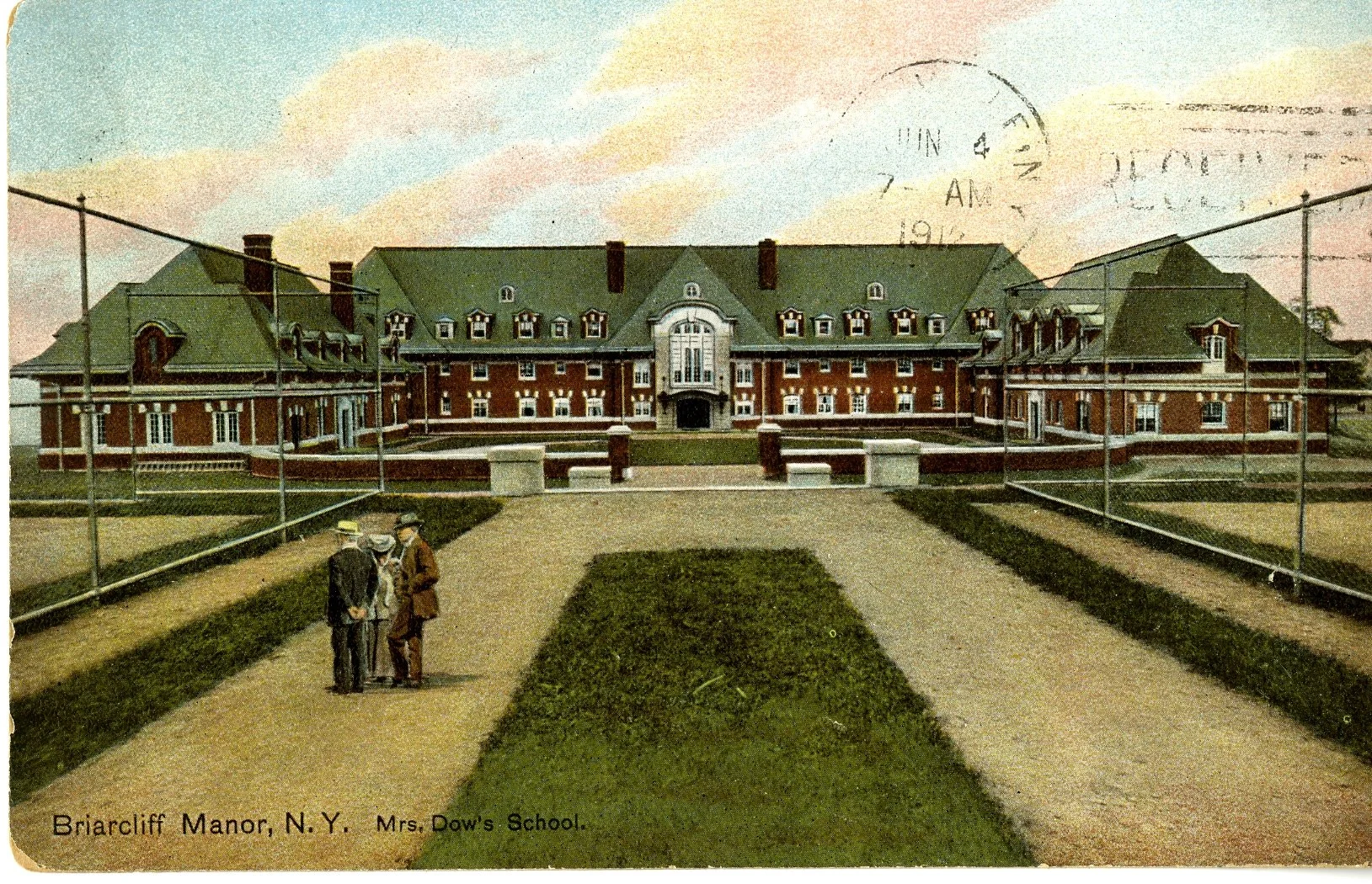
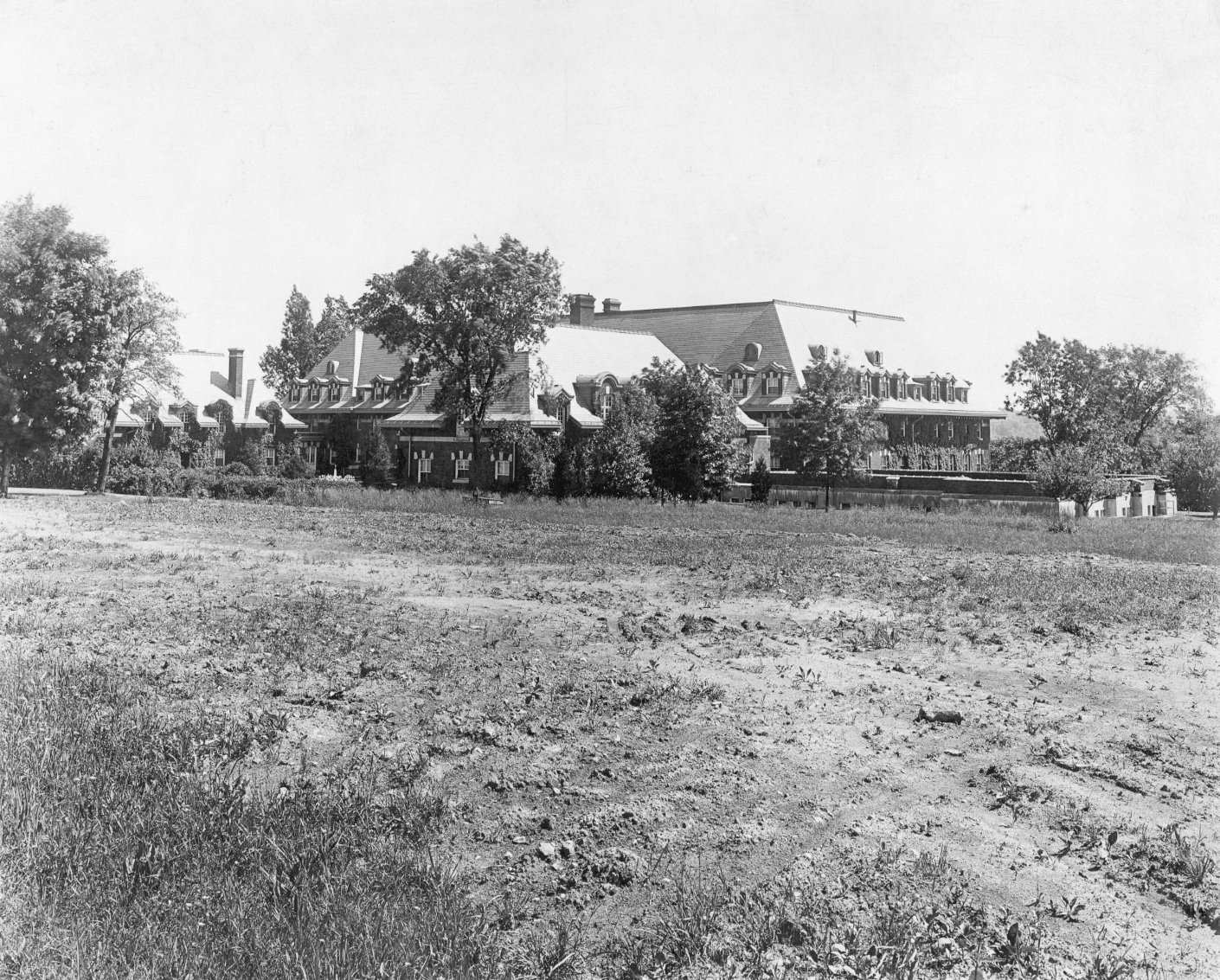
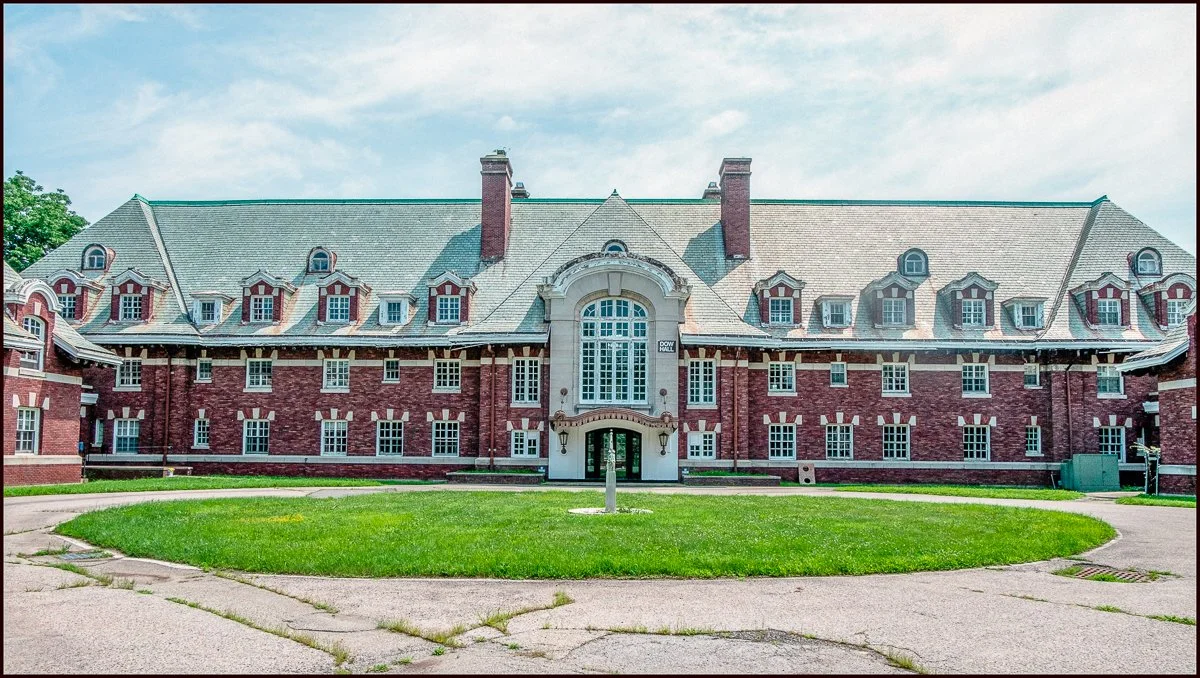
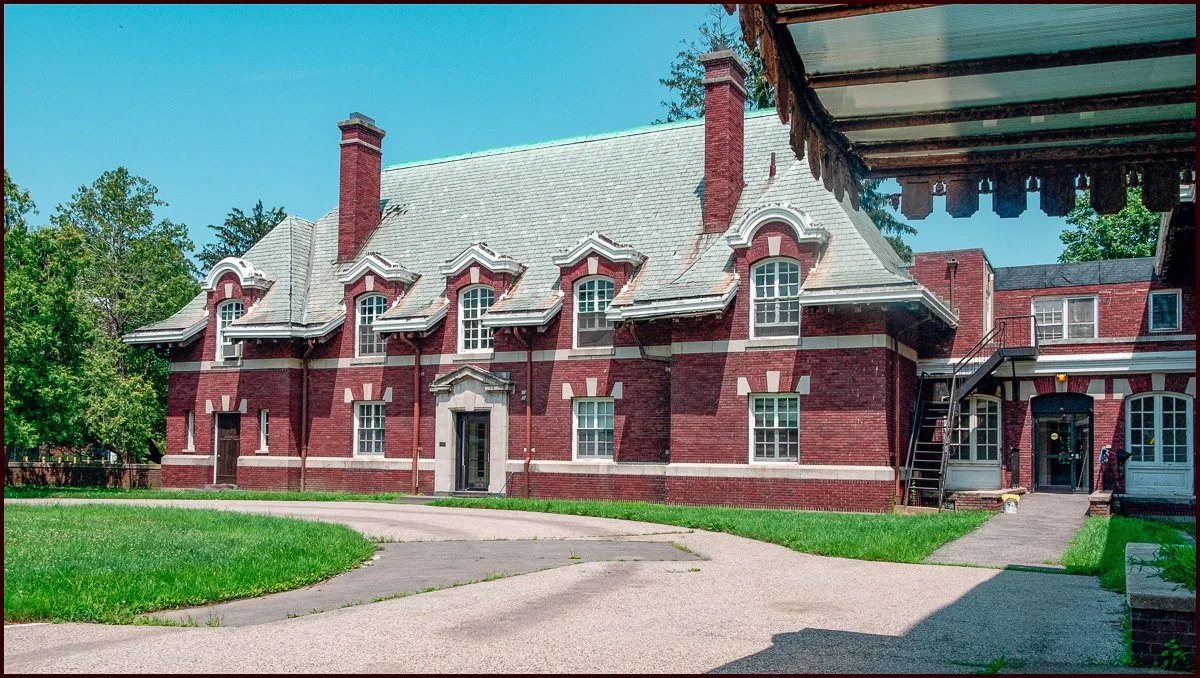
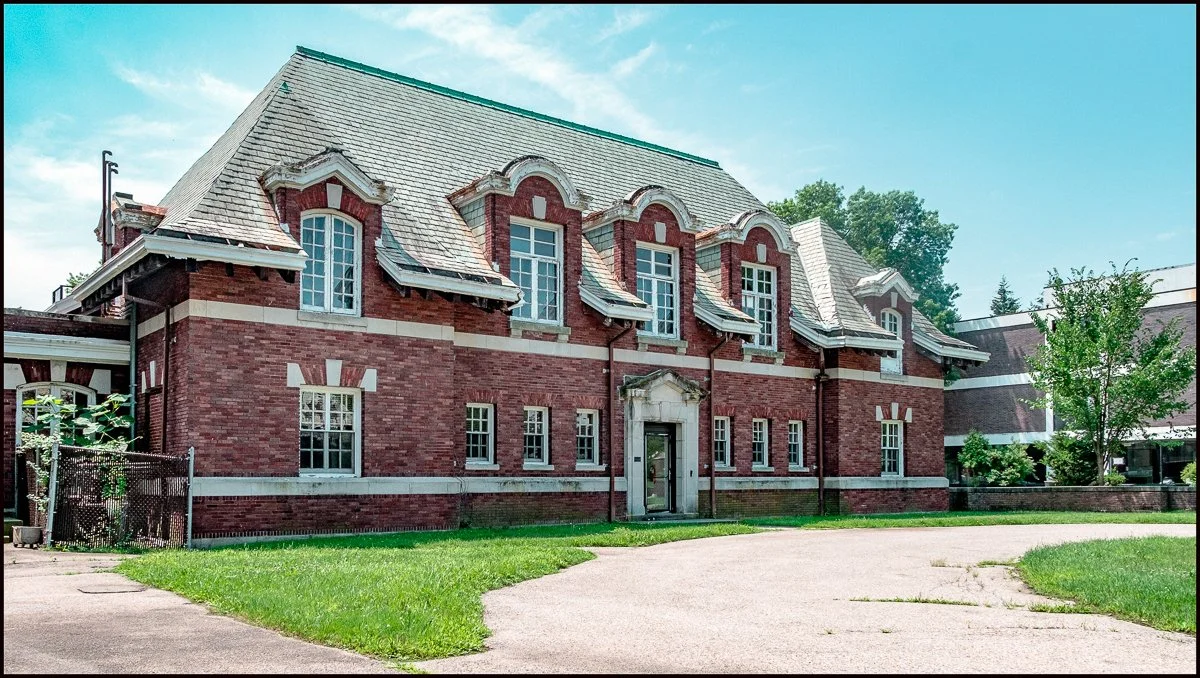
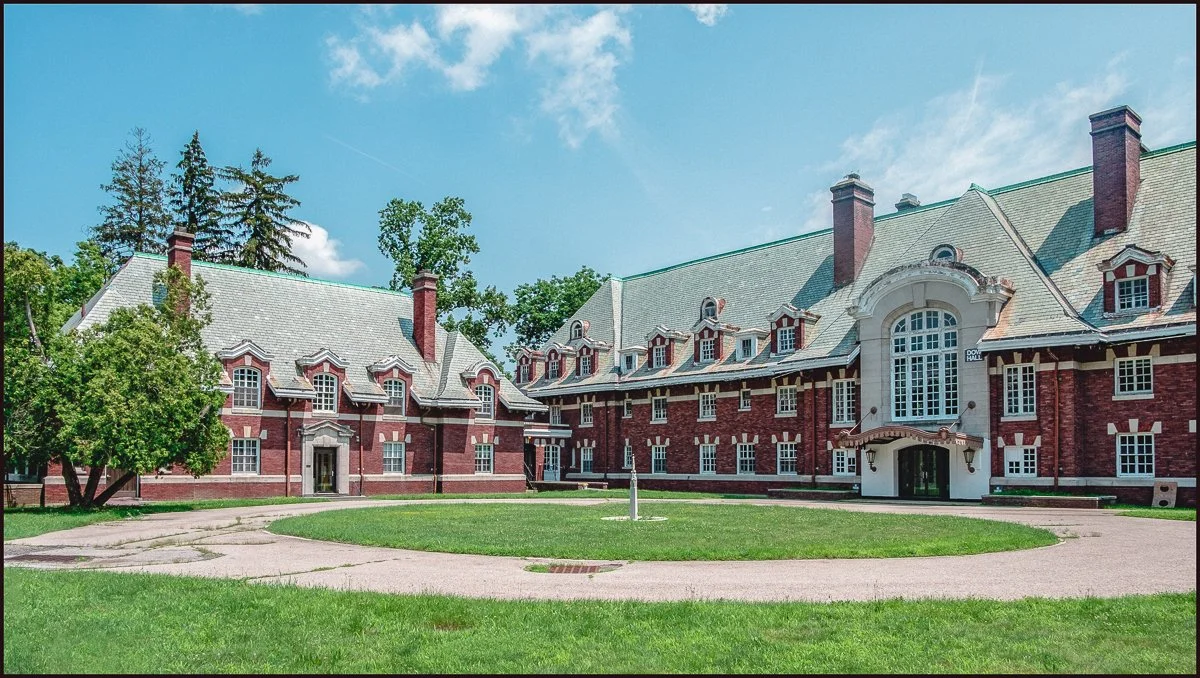
Mrs. Dow's School for Girls was founded in 1903 at the Briarcliff Lodge, by educational reformer Mary Elizabeth Dunning Dow; Two years after Mrs. Dow’s School for Girls was founded at the Briarcliff Lodge, Walter W. Law (the founder of Briarcliff Manor) gave Mrs. Dow 35 acres and built the Châteauesque Dow Hall. Harold Van Buren Magonigle was the architect). Mrs. Dow retired in 1919 and Edith Cooper Hartmann took over . She instituted a two-year postgraduate course. The school became a junior college called Briarcliff Junior College in 1933 and continued in that form until 1957, eventually awarding four-year bachelor’s degrees. The school library, which had 5,500 volumes in 1942, expanded to about 20,000 volumes by 1960. By the time of its closing, the college had about 300 students.
From 1942 to 1960 the school did well under President Clara Tead. Tead's husband Ordway Tead served as chairman of the board of trustees. Gradually, the school improved academically. In 1944 It was registered with the State Education Department and accredited by the Middle States Association of Colleges and Schools and in 1951, the Board of Regents authorized the college to grant Associate of Arts and Associate of Applied Science degrees. The following year, the Army Map Service selected the college as the only one in the country for professional training in cartography.
The school purchased Shelton House, a building across Elm Road in 1944 for use as a dormitory and in 1951 a classroom and office wing was built. Howard Deering Johnson became a trustee in 1955 and a dormitory, “Howard Johnson Hall” was built. From 1963. The college grew rapidly from 1963 with two new dormitories being built: the fine arts and humanities building, the Woodward Science Building A 600-seat dining hall was also added. The college began offering Bachelor of Arts and of Sciences degrees. The Center for Hudson Valley Archaeology opened in 1964. From 1960-1964 college enrollment rose from around 300 to over 500 and by 1967rose to 623, with 240 freshmen. During the Vietnam War, students protested US involvement, and President Adkins and trustees resigned and James E. Stewart became president. In 1969, twelve students, led by student president Edie Cullen, stole the college mimeograph machines and gave nine demands to the college. The next day, around 50 students participated in a 48-hour sit-in at Dow Hall. Josiah Bunting III became president in 1973 and Pace University and New York Medical College of Valhalla began leasing campus buildings. By 1977 the student population had declined to 350 students and dormitories were half empty.
The problem was that co-educational colleges had by this time become increasingly popular in the 1970s and the college found itself struggling to survive. In Spring 1977 President Bunting left for Hampden-Sydney College, thus contributing to the college’s problems. Rather than continue to struggle, the college's trustees voted to sell the campus to Pace University. However, the trustees instead attempted to reach a collaboration agreement with Bennett College, a junior women's college in nearby Millbrook which was also struggling with low enrollment. They were unsuccessful and Briarcliff College was sold to Pace in April 1977 for $5.2 million ($27 million in 2024) after both Briarcliff and Bennett entered bankruptcy.
The Hastings Center for Bioethics moved to Tead Hall (the school's library) in 1988. It would later move to the town of Garrison
The original Mrs. Dow's School building remained as Pace’s co-ed residence hall. Pace operated the site as part of its Pleasantville campus. As of 2025 the had nine buildings with a combined 330,308 square feet. The buildings were used for offices, student housing, dining, recreation and education. The campus' 37 acres also included tennis courts and ball fields. The Pleasantville site is about 3 miles away from the Briarcliff College site. Pace put the site up for sale in 2015. In October 2016, the Briarcliff Manor-Scarborough Historical Society hosted an event at Dow Hall to raise awareness of the building and its history, in order to encourage its preservation.
In January 2017, Pace sold the property for $17.35 million to the Research Center on Natural Conservation, a China-based nonprofit organization that hosts conferences related to global warming and conservation.
In February 2021, a Viznitz Yeshiva congregation purchased the property for $11.75 million. The congregation, Dkhal Torath Chaim Inc. The buildings there had fallen into disrepair, but were brought back up to code as a government condition for the sale. The Yeshivath sought village approval to renovate certain existing buildings and to use the facility as a private religious education institution. When after about two-years of going through the application process the village had not granted approval for the plan, Yeshivath Viznitz Dkhal Torath Chaim and Khal Torath Chaim of Rockland, Inc., filed a lawsuit in federal court that alleged governmental discrimination. Early in 2025 the Yeshiva agreed to dismiss the lawsuit and sell the former Pace campus. According to The River journal:
“Yeshivath Viznitz Dkhal Torath Chaim and Khal Torath Chaim have reached an agreement with the village of Briarcliff Manor to suspend litigation and explore alternative uses of the former Pace campus at 235 Elm Road, the village announced in December.
Third-party developers ae pursuing the purchase of the property for residential use, and the village has agreed to study its current zoning, review potential site plans, and consider the associated impacts and benefits of such redevelopment.”
Holiday House
“Holiday House, Inc. was an organization of alumnae of Mrs. Dow’s School who ran home for dependent children for the past 10 years. The school changed hands, moved to Long Island and its policy changed, so the corporation had to dissolve.
After Holiday House had been sold, the board of directors found it had assets consisting of a $3,000 mortgage and about $1,000 in cash.
…
Members of the Children’s Association staff said that the funds probably would be used to send needy children to Croton Point Camp in the Summer and to give underprivileged children and widowed mothers small allowances.” “Child Society Gets $4,000 Windfall”. The Herald Statesman, Yonkers, N.Y., Wednesday, July 9, 1941.
“Mrs. Lane makes a real mother and companion for the seven little girls at Holiday House. She directs them wisely, teaching them to be neat and clean and to have simple tastes. Every morning each girl makes her own bed, tidies up her room and helps seat the tale for breakfast. When Mrs. Lane goes out Bertha takes charge of the family and cooks the meals. Her small, chubby stature conceals there fourteen years.
Loretta, tall and childishly awkward, does beautiful needlework. There is a lovable quality about her, and her face lights up at everything that happens.
Blue-eyed Hazel, reserved yet glowing with vitality, helps Bertha in the house. She has a soft that croons pleasingly.
Then there is bashful Marian making herself unobtrusive. From her brown eyes and small face shine out a wealth of friendliness and love to the world.
Entirely different from her is nine-year-old Ethyl, who goes bounding, skipping, and running from one place to another, enthusiastically interested in everything and asking innumerable questions, the answers to which bring a captivating smile. Her soulful blue eyes and small pub nose make a curious combination of impudence and winsomeness.
The children go to the Briarcliff Manor public school where, in addition to their academic studies, they learn to cook and sew. They belong to the Girl Scouts, regularly attending the meetings and parties. The little family at the foot of the hill is a happy one and one in which discord is unknown because of love for each other. “Happy Holiday House’. E. Huber, The Briarcliff Circle, Vol. V. Christmas Number, 1929.
A few interesting facts:
Toward the end of its ownership by Pace University, the site was used as a filming location. Its cafeteria, known as the Briarcliff Dining Center, was used for the 2012 film Inside Llewyn Davis and for the 2016 first-season finale of the show The OA.
As mentioned above, Josiah Bunting III served as president of Briarcliff College from 1973 to 1977. His half-brother is Dick Ebersol, the creator and former executive producer of Saturday Night Live. This may go some way towards explaining why Briarcliff Manor is featured in the very first episode of SNL in a segment called “Bring out your guns”.
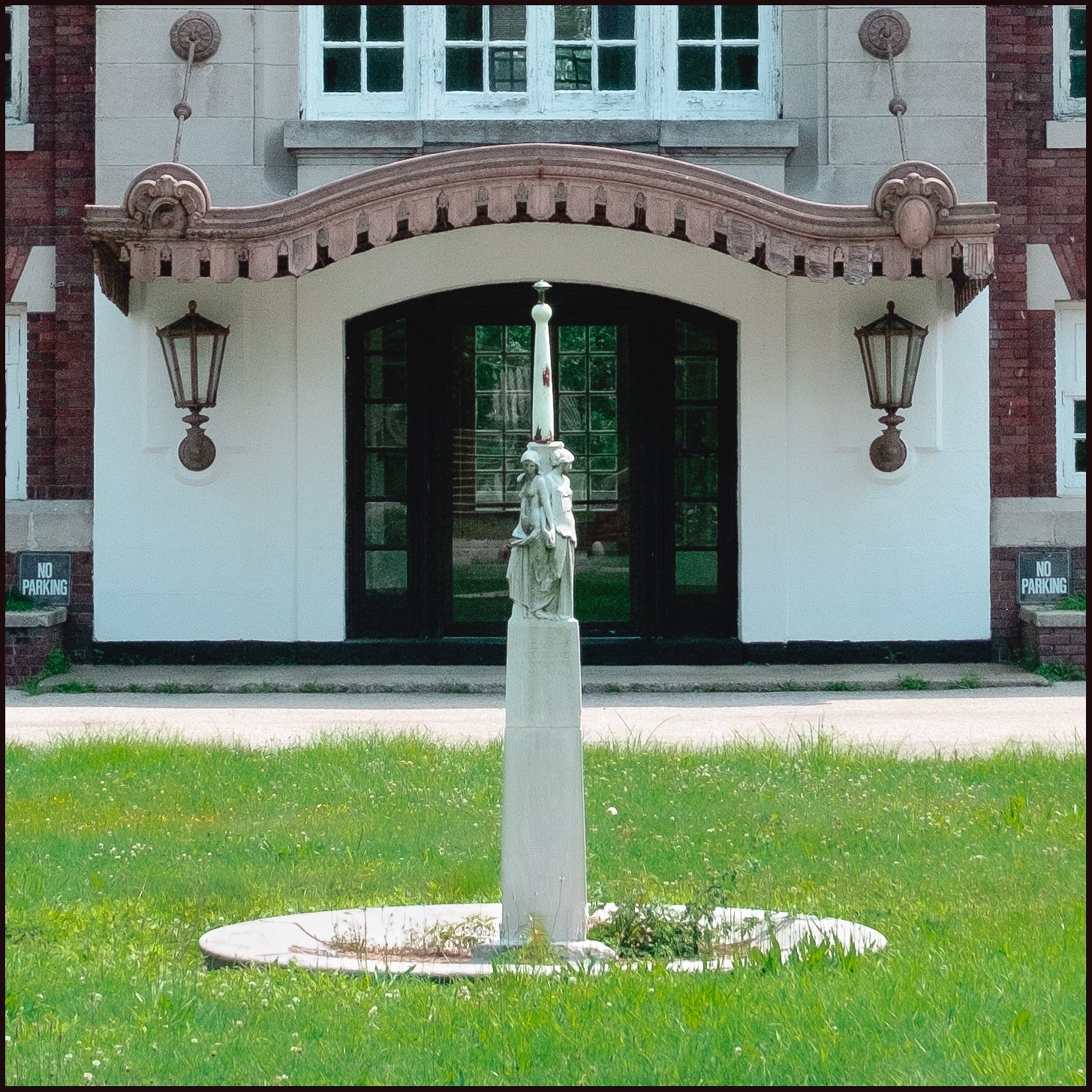
The fountain (see below) that stands outside Dow Hall, formerly the main building of Mrs. Dows School and later of the Briarcliff Junior College and the Briarcliff Campus of Pace University. the fountain was the creation of Lee Lawrie, well-known sculptor who also created the Atlas statue outside Rockefeller Center in New York City.
Additional Photographs
See below. The BMSHS has more photographs related to Mrs. Dow’s school (e.g. Mrs. Dow’s School 1906-1907 - Marjorie Severance Collection), and still more that we haven’t scanned yet.
Historical Photographs





Dow Hall Today
Sources
Mis Porter’s school. Miss Porter's School - Wikipedia
Briarcliff College. Briarcliff College - Wikipedia
“The Changing Landscape. A History of Briarcliff Manor-Scarborough”. Mary Cheever and Briarcliff Manor Scarborough Historical Society. West Kennebunk, Maine, Phoenix Publishing, 1990.
“Child Society Gets $4,000 Windfall”. The Herald Statesman, Yonkers, N.Y., Wednesday, July 9, 1941.
“Happy Holiday House’. E. Huber, The Briarcliff Circle, Vol. V. Christmas Number, 1929.
Yeshiva Agrees to Dismiss Lawsuit, Sell Briarcliff Campus. Robert Brum, River Journal, January 2025.
Briarcliff College Explained. Briarcliff College Explained
BMSHS Files